

ACAMIS Technology Conference · October 18, 2026
A case study from the 
From Lab to ClassroomRunning an AI Student Program

The next 60 minutes
From what families ask to what it means for teachers.
- Part 1What families askThe ISB parent talk, what employers now want, and what parents ask us
- Part 2How we teachOur philosophy, learning framework, outcomes, and assessment
- Part 3The proofThe ISB AI Founders week, from day one to demo day
- Part 4For teachersThe ethics, the comfort to build, and a short demo
About Arena School
AI tools change every week.
We teach learners to make the calls.
 Startup Program
 Partner Network
Hands-on programs where every learner makes real things with AI.
- Learners make every decision
- AI does the building
- Real work for a real audience
- Students, grades 6 to 12
- Teachers and schools
- Parents and families











Part1
Families are asking what AI means for their children’s future.
- 1What families askThe ISB parent talk
- 2How we teachFramework and outcomes
- 3The proofISB AI Founders week
- 4For teachersEthics and comfort to build
Where this started · ISB PTA Parent Coffee, October 14, 2026
This week, we talked with ISB parents about what is changing at work, and what their children might practice now.
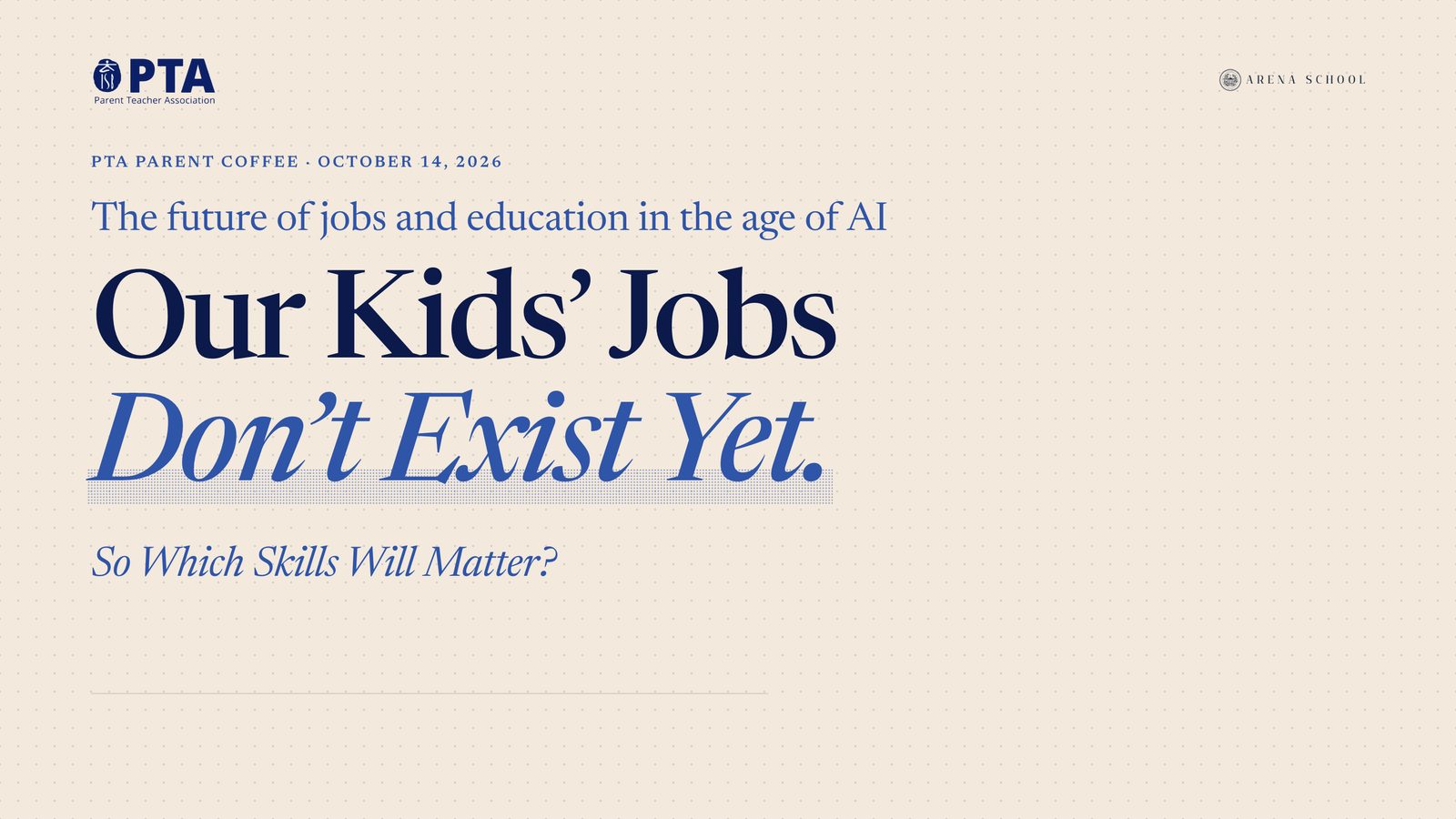
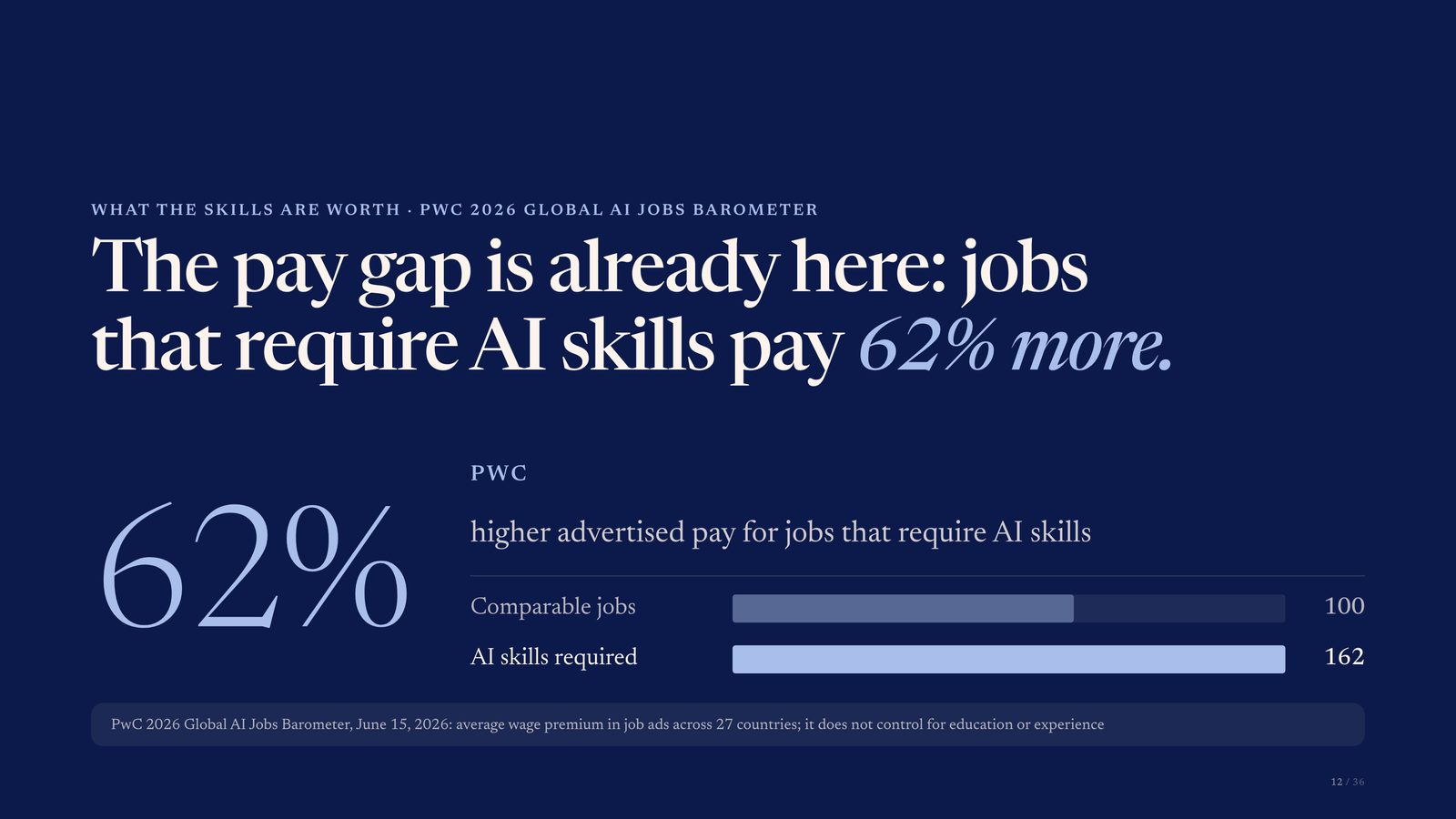
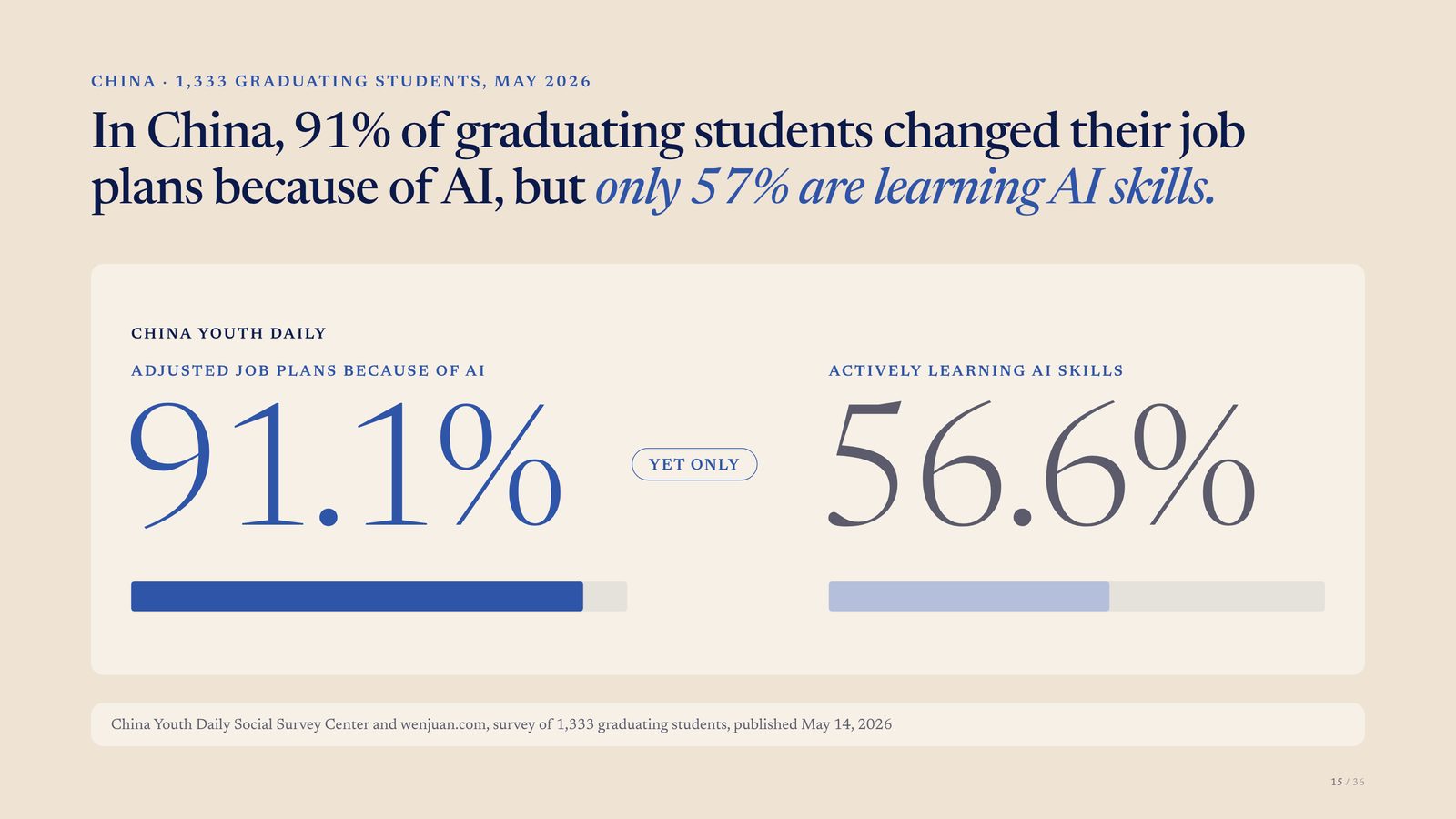
PwC 2026 Global AI Jobs Barometer. China Youth Daily survey of 1,333 graduating students, May 2026.
What employers now look for · from my hiring at a frontier AI lab in China
Many companies now want people who use AI across the whole job, not only in technical roles.
- AI fluencyUses AI on everyday work, in any role, not only engineering.
- Works with agentsHands multi-step work to AI agents, then checks what comes back.
- RangeLearns new tools fast and works across the whole job.
Many parents hear this at their own workplaces. So they ask whether their children are learning it.
What families ask us
Parents are asking one practical question:
which skills will outlast the tools?
From surveying parents in the ISB community and other local communities in mainland China
- Which skills last as the tools change?
- Will AI do the thinking for my child?
- What should my child practice now?
- Three skills that stay useful
- Used well, AI deepens thinking
- Real products, in five days
Many parents don’t see AI as an academic subject, like learning to code.
They see it as a life skill: optional for many jobs today, and likely non-negotiable by the time their children start working.
Part2
We teach the part of learning that AI can’t do for you.
- 1What families askThe ISB parent talk
- 2How we teachFramework and outcomes
- 3The proofISB AI Founders week
- 4For teachersEthics and comfort to build
The question we try to answer at Arena School
When AI can
in seconds, what must our students
still learn to do?
Arena School · teaching philosophy
Three human skills AI can’t supply.
Without them, AI does the thinking.
Choosing what is worth doing, before anyone assigns it.
Without itAI picks the problem, and learners follow.
Judging whether the output is actually good.
Without itLearners accept the first answer AI gives.
Finishing the work so people can trust it.
Without itThe work stays an unchecked first draft.
Why the design matters · two 2025 studies
Both used AI,
but the design shaped the results.
−17% exam grades after practicing with plain ChatGPT. The tutor version largely avoided the drop.
2× the learning gains of an active-learning class, in less time, with an AI tutor built on the same methods
Bastani and others, PNAS, June 25, 2025: grades fell 17% once plain ChatGPT was taken away; with safeguards, the harm was “largely mitigated”; Kestin and others, Scientific Reports, June 3, 2025: 194 Harvard physics students, median learning gains more than double
The Arena School learning framework · where AI comes in
AI can help at every step of the cycle. The decisions stay with the learner.
Which problem, for whom, and the plan
Suggests angles and drafts the plan
“Why this problem?”
Which sources and answers to trust
Searches, summarizes, and compares options
“How did you check it?”
What to build, and what to cut
Writes the code, drafts, and visuals
“How do you know it’s good?”
What to change after critique
Gives a first round of feedback
“What would you do differently?”
Learning outcomes
Across every program, learners will be able to…
Learners are whoever a program is for: students, teachers, school leaders, or parents. The outcomes stay the same; the depth grows.
- Turn a broad interest into a focused, researchable question.
- Plan a project with milestones, and adjust the plan based on progress.
- Find, evaluate, and cite sources, including checking the accuracy of AI output.
- Compare options against criteria, and justify a choice.
- Explain how AI tools work, where they fail, and the bias and privacy issues they raise.
- Build and test a product, prototype, or solution, deciding which steps to hand to AI and disclosing how they used it.
- Structure an argument and write it clearly, in their own words.
- Present to an authentic audience, and defend their reasoning under questioning.
- Work in a team, share roles, and contribute to a shared product.
- Give and use critique from teachers and peers to revise their work.
- Reflect on their process and on what they would do differently.
Learning outcomes and assessment
When AI can polish the product, we assess the thinking behind it.
The productWhat AI can polish
The thinking behind itWhat we assess
In practiceUsed with ISB students, summer 2026
- Process journal
- Drafts
- Recorded defense
Part3
In five days, ISB students built and launched
working products with AI.
- 1What families askThe ISB parent talk
- 2How we teachFramework and outcomes
- 3The proofISB AI Founders week
- 4For teachersEthics and comfort to build
The case · ISB AI Founders Program, August 5–9, 2026
An AI builder week for grades 7 to 12:
learn AI skills, start a company, build something real.
- Daily feedback on each team’s idea
- The same question all week: “How did you check it?”
- Founders, product managers, and designers from tech companies
- Real stories of how AI is changing their work
application
The case · the structure, day by day
Ten stages in five days, and every day ends with something real.
- 01Find the idea
- 02Validate it
- 03Form the team
- 04Define it





A one-page plan and a first prototype
- 05Design it
- 06Build it
- 07Ship it live




A live link that real people try
- 08Test and iterate


A rebuilt product, shaped by users
- 09Brand it




A name, a landing page, and a price
- 10Pitch and sell

A two-minute pitch to judges and families
The case · where it started: Bodley Academy, Hong Kong, summer 2025
In five days, an 11-year-old
turned sign language into speech.
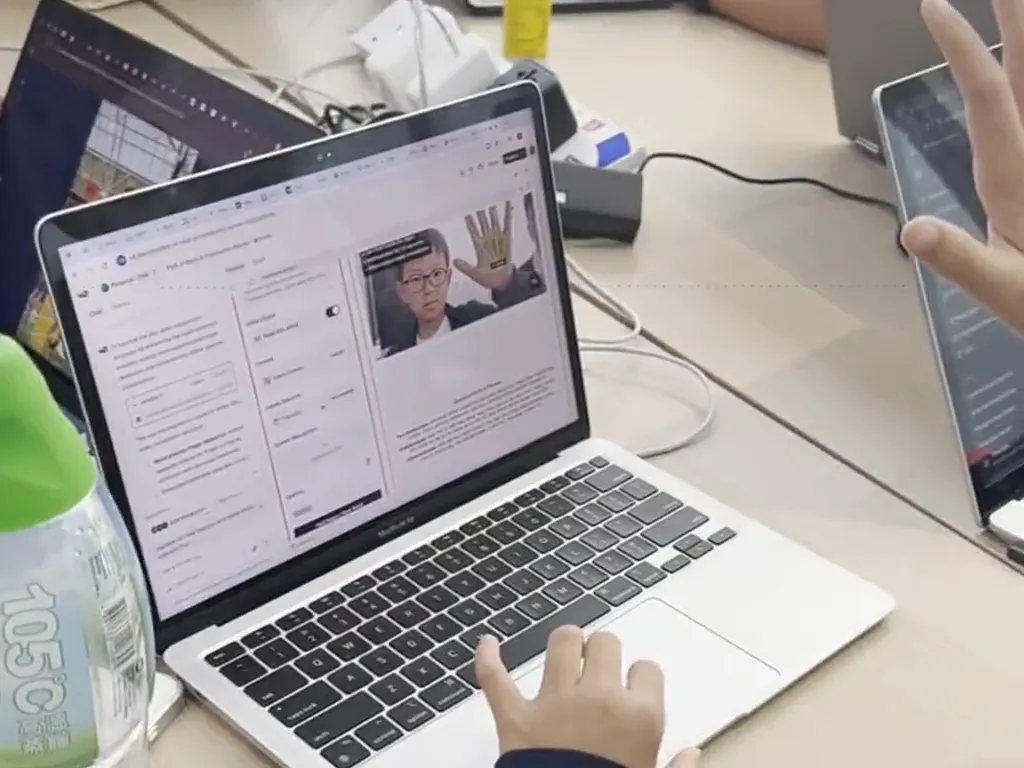
- 01Found the problemAgencyHe chose the problem himself: his cousin is deaf.
- 02Sketched itAgencyAn app that turns sign language into spoken words.
- 03Built itCraftAI wrote the code; he decided what the app should do.
- 04Changed itTasteHis grandmother struggled at first, so he made the audio clearer.
The case · demo day
On day five, teams pitched working products
to judges from Harvard, Stanford, Y Combinator, and AI labs.
- Opened and used each one before scoring
- Scored what worked, not the slides
- Two minutes per team
- To judges and families in the room
- From the judges, on the spot
- Why this problem, and why this design

 and AI labs
The case · how the week built each learning goal
Every learning goal, practiced on real work
for real people, in five days.
- Day 1Pick a problem
- Day 2Go public
- Day 3The rebuild
- Day 4Polish and price
- Day 5Demo day
- Inquiry and planningTurn an interest into a focused questionPick a problem and a planA plan and a first prototype
- Research and evaluationCheck sources, including AI outputTest it with the people it’s forChoices backed by what users did
- Creating and communicatingBuild and test a product with AIShip itPrice itA live product at a public link
- Collaboration and reflectionUse critique to revise the workRebuild itDefend itA rebuilt product, and a pitch to judges
Tools change. The process carries over: find an idea, work as a team, test with real people, and learn from feedback.
Part4
Families hope AI shows up across subjects.
So how might it fit in yours?
- 1What families askThe ISB parent talk
- 2How we teachFramework and outcomes
- 3The proofISB AI Founders week
- 4For teachersEthics and comfort to build
From our work with teachers
Two things we’ve seen help:
the ethics, and the comfort to build.
- When AI use is fair, and how students disclose and cite it
- Which tools your school allows, and keeping student data out
- How to assess the process, not only the polished product
- Has built one small thing with AI, start to finish
- Knows the steps students take: prompt, test, and fix
- Can ask any student, “How did you check it?”
Many students already use these tools outside school. Knowing what that looks like helps us guide them.
What comfortable looks like
You don’t need to be a master vibe coder. It helps to know what your students are doing.
Vibe coding: building software by describing it to AI in plain English
- Build launch-ready apps
- Keep up with every new tool
- Write code
- Build one small tool for your class
- Explain how AI predicts likely words
- Ask about the process behind their work
Comfortable means you can follow how a student reached the outcome they present.
That’s what lets you coach it, and assess it.
What comfortable looks like · teachers as builders
Teachers can build for their own class without writing code.
Literary devices, one click away
Instead of color-coding a poem by hand at the board, the teacher tags each literary device before class.
In class, one click reveals each device and its label.
Class time goes to discussing the poem.
A simulation made for this class
Students take a model apart and rebuild it, or change one variable in a physics setup.
Built for this lesson, not the nearest YouTube demo.
Students test ideas instead of watching one.
Short demo · about five minutes
Here’s what comfortable looks like:
one sentence, one working tool.
One plain sentence
A change to a classroom tool, called out by the room.
- “Add a Chinese version of the parent email.”
- “Add a timer to the quiz.”
Claude Code writes it
An AI tool that builds web apps from plain English.
 Claude Codeby Anthropic
Add a Chinese version of the parent email under the English one.
Working in about two minutesTry it on the big screen
Then ask what we ask students: how did you check it?
- “Does the Chinese match the English?”
- “Does it change with the tone?”
What our mentors asked all week · worth trying on Monday
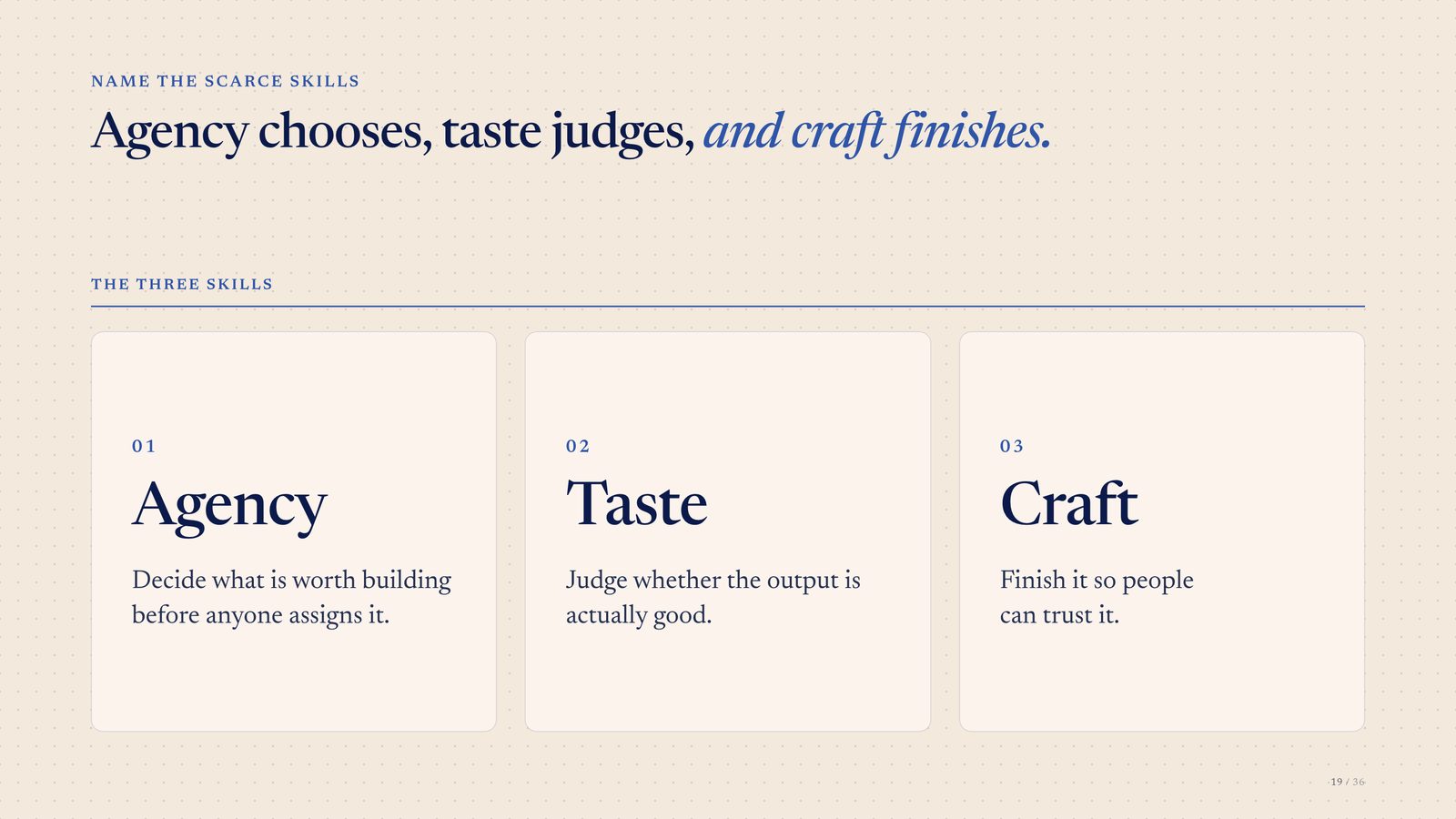
Coaching matters more with AI, and three questions go a long way.
From the person with the answers
to the coach who asks the questions
It’s what many of you already do, and what our mentors did all week.
- 01Agency“Why this problem?”They choose, not the AI.
- 02Taste“How do you know it’s good?”They judge what it made.
- 03Craft“What would make someone trust it?”They check it and finish it.
The big picture
AI can do the making.
The thinking is still ours to teach.
- 1Families careMany parents see AI as a life skill, and ask what children practice.
- 2Design mattersTwo studies, opposite results. Learners choose, judge, and finish.
- 3Students can shipLive products in five days, no coding required.
- 4What helps teachersThe ethics, and enough comfort to build one small tool.
No one here has to be a master “vibe coder.” Knowing what your students are doing may be enough to keep coaching them.
Thank you · questions welcome
If this could help your school,
we’d love to hear from you.
- StudentsBuild and pitch a real product with AI
- Entrepreneurship & AI Intensive
- App Design Workshop
- College Portfolio Workshop
- Schools and tech teamsAI training that works inside your school’s rules
- AI for Educators
- Tech coaches and IT directors
- Families and communityHonest talks on AI, work, and college
- Community Dialogues
- Parent coffees and talks
 Today’s slides, checklist, and tool guidearenaschool.org/talks/
- WeChatjj-xiaohan
- Emailcontact@arenaschool.org
- Websitearenaschool.org
Startup ProgramPartner Network